Investing and trading both use markets. They are not the same job.
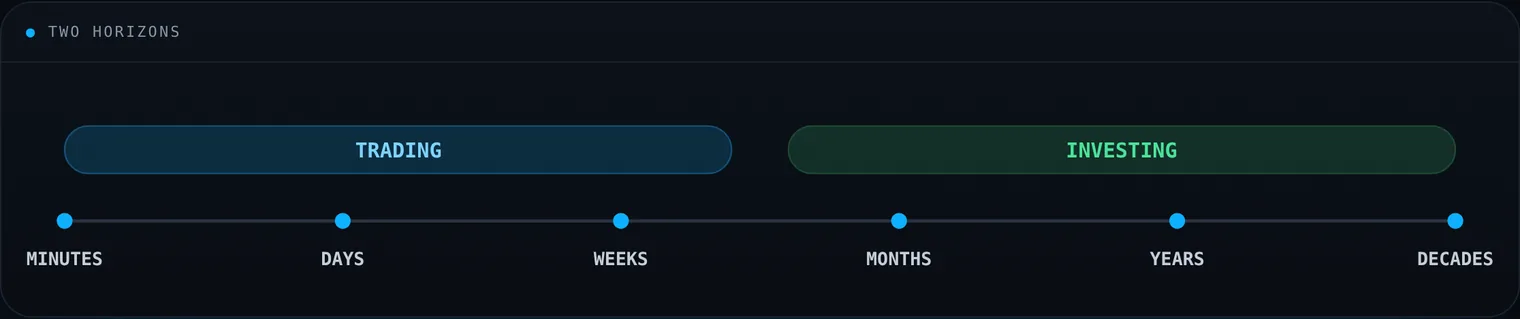
Pick the horizon first, then apply the rules that match it.
Investing
You buy an asset to hold for months or years, seeking medium to long-term capital appreciation. Tomorrow’s print matters less than where the asset could be in five or ten years.
Typical holdings are stocks, ETFs, index funds, bonds and property. The work is fundamentals (earnings, balance sheet, competition, growth) plus time and compounding. Dividends can add to the return. Price noise is expected; patience is part of the method.
Trading
You try to capture a move measured in minutes, days or weeks. The chart is the main map: structure, trend, support and resistance, pattern.
That means daily attention, faster decisions and a higher rate of being wrong. Size and stops have to match. Discipline is not optional: leverage and frequency will otherwise erase the account.
The split
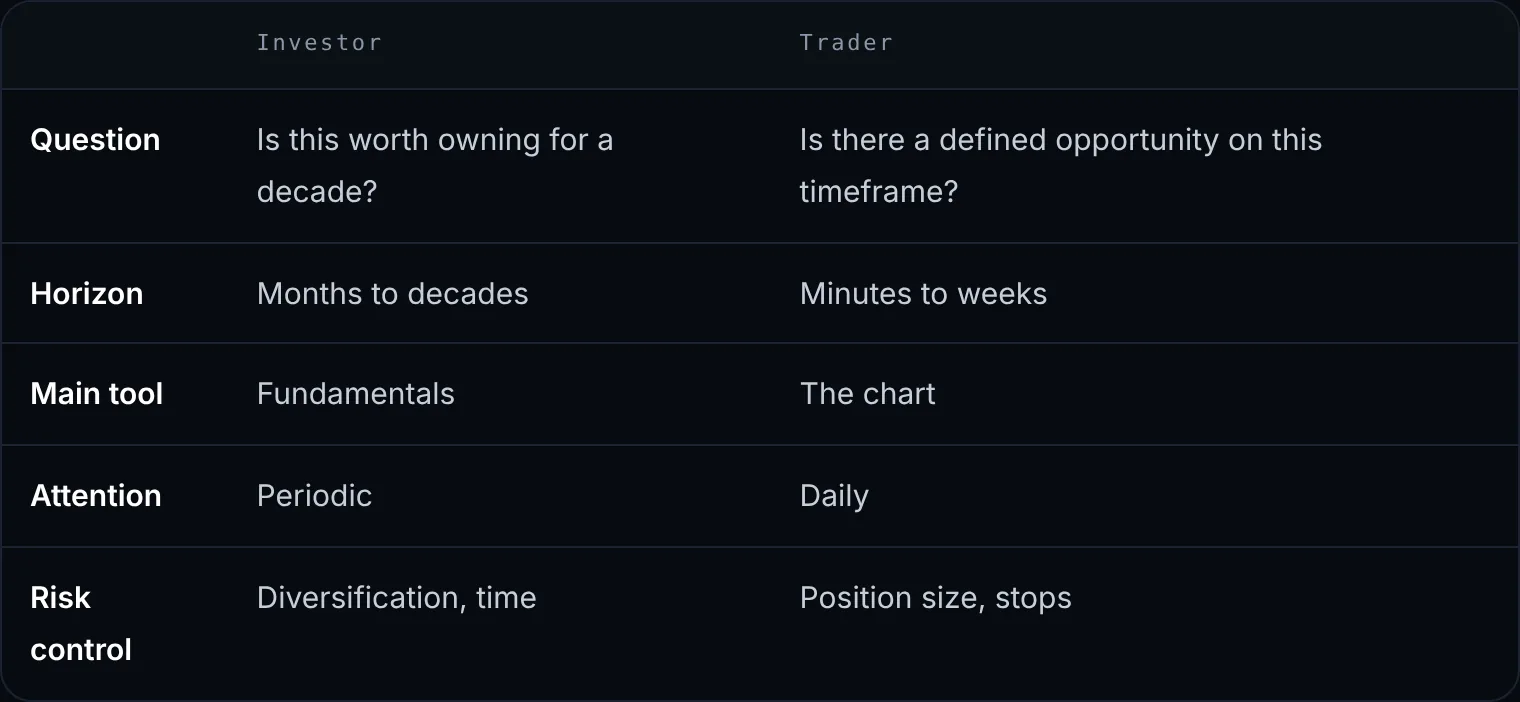
Neither is the better path by default. They fit different time, temperament and risk limits.
Doing both
Many accounts run a long-term book and a smaller trading sleeve. Keep the rules separate: different size, different exits, different scorecard. Mixing a ten-year thesis with a two-day stop is how the plan breaks.
Where Yard Charts fits. Yard Charts is built for the trading side: pattern, level, entry and stop on the chart. It can add to your view of a company or asset, but it does not replace the long-horizon work on a company, a crypto token or a fund.
Alerts and examples are for education only and are not investment advice. Past patterns do not guarantee future results.
Disclaimer: Yard Charts provides technical-analysis tools and alerts. It is not investment advice. Trading involves risk of loss.